
Freq Box provides a reliable and centralized platform for discovering the latest satellite channel frequencies. The site delivers detailed technical information, including frequency values, polarization, and symbol rates, presented in a way that is easy for both beginners and advanced users to understand and apply.
Beyond just numbers, Freq Box explains how changes in satellite transmissions affect reception, offering practical guidance for adjusting equipment and troubleshooting issues. With this knowledge, viewers can enjoy their favorite channels seamlessly while exploring new content across multiple satellites.
Freq Box serves as a comprehensive hub for viewers seeking the latest satellite frequency details. From major regional satellites to international networks, the platform provides precise data on channel transmission parameters, including frequency bands, polarization types, and symbol rates, all curated for easy reference.
Beyond simply listing numbers and values, Freq Box offers context and guidance on how these changes affect reception. Viewers gain insight into aligning their receivers, troubleshooting common issues, and maintaining consistent signal quality without unnecessary interruptions.
The platform is designed for a wide audience, from casual television watchers exploring new channels to enthusiasts and technicians who require in-depth technical specifications. Every update is presented with clarity to ensure information can be applied effectively.
With continuous monitoring of satellite activity, Freq Box keeps users informed about channel launches, relocations, and frequency adjustments. This proactive approach helps viewers anticipate changes and maintain seamless access to their preferred content.
Practical tips, tutorials, and visual guides further enhance the experience, allowing users to manage their satellite setups confidently. By combining real-time data with actionable instructions, the platform transforms complex broadcasting details into manageable information.
Ultimately, Freq Box empowers audiences to fully embrace the possibilities of satellite television. Accurate, up-to-date, and easy-to-use, it provides a reliable companion for exploring channels across the globe while ensuring a smooth and enjoyable viewing experience.
Changes in channel frequencies and transponder settings happen regularly, and even minor adjustments can affect signal quality. Viewers need reliable, up-to-date information to ensure their receivers are properly tuned and ready for optimal performance.
Freq Box is designed to provide this essential information, offering comprehensive coverage of TV channel frequencies across all major satellites. The platform delivers precise technical details, including frequency values, polarization, symbol rates, and satellite coverage areas, all in an organized and user-friendly format.
The platform goes beyond simple listings by offering insights into how frequency changes and satellite movements impact reception. This guidance helps users make informed adjustments to their equipment and avoid common technical issues.
Freq Box caters to both casual viewers and satellite enthusiasts. Beginners can follow step-by-step instructions for tuning their receivers, while advanced users can access detailed technical data to fine-tune their setups for the best possible quality.
By providing continuous updates and monitoring satellite broadcasts, Freq Box ensures that viewers are always aware of new channels, frequency shifts, and other important changes. This keeps their satellite systems fully functional and up-to-date at all times.
Ultimately, Freq Box empowers viewers to enjoy a seamless and enriched satellite television experience. With accuracy, clarity, and ease of use, the platform makes accessing and exploring channels across multiple satellites simple and reliable.
Freq Box is dedicated to providing comprehensive information on TV channel frequencies across all major satellites. The platform ensures that viewers can easily access the latest technical details, including frequency values, polarization, symbol rates, and coverage information, in one organized and user-friendly location.
Beyond simple listings, Freq Box offers insights into why channels change frequencies and how these updates may affect reception. This approach allows viewers to make adjustments confidently and avoid common technical issues that can disrupt their viewing experience.
The platform caters to both casual viewers and satellite enthusiasts, presenting complex technical information in a clear and understandable format. Whether searching for a specific channel or exploring new satellite coverage, Freq Box provides practical guidance for all users.
By offering real-time updates and continuous monitoring of satellite broadcasts, Freq Box ensures that users stay informed about the latest channel additions, frequency shifts, and transponder changes, keeping their satellite systems properly tuned at all times.
Ultimately, Freq Box empowers viewers to enjoy their favorite channels without interruption, combining accuracy, convenience, and ease of use in a single platform that makes satellite television more accessible than ever before.
Abu Dhabi TV, part of Abu Dhabi Media, is a leading Emirati television channel launched in 1969, with its modern format established in 2000 and rebranded as Abu Dhabi Al Oula in 2008.
Broadcasting primarily in Arabic, it offers a diverse mix of news, dramas, talk shows, cultural programs, and documentaries, reflecting the UAE’s heritage and modern achievements.
Popular programs include Ana wa Binti and Min Wahi Al-Tasreeh, appealing to Arab families across the Middle East and beyond.
As a free-to-air channel, it is accessible via major satellites and streams live on www.adtv.ae and YouTube.
This guide provides the latest frequencies for Abu Dhabi TV on satellites as of June 2025, a step-by-step tuning process, reception tips, and an overview of its engaging content.
Why Watch Abu Dhabi TV?
-
Diverse Content: Offers news, dramas, cultural, and religious programs, catering to varied interests.
-
Free-to-Air Access: Available without subscription on satellites and online platforms.
-
High-Quality Broadcasts: Provides HD and SD options for clear, immersive viewing.
-
Cultural Focus: Showcases Emirati heritage and modern UAE developments, resonating with Arab audiences.
-
Global Reach: Broadcasts to the Middle East, North Africa, Europe, and beyond, with streaming for worldwide access.
Abu Dhabi TV Satellite Frequencies
To tune into Abu Dhabi TV, you need accurate frequency, polarization, symbol rate, and FEC (Forward Error Correction) settings for your satellite receiver.
|
Satellite |
Frequency |
Polarization |
Symbol Rate |
FEC |
Coverage |
Details |
|---|---|---|---|---|---|---|
|
Nilesat 201/Eutelsat 7 West A (7.0° W) |
11823 MHz |
Vertical (V) |
27500 kS/s |
5/6 |
Middle East, North Africa |
HD, DVB-S2, strong in UAE, Egypt, Saudi Arabia. Named Abu Dhabi TV HD. |
|
Arabsat (Badr 4/8) (26.0° E) |
11804 MHz |
Horizontal (H) |
27500 kS/s |
3/4 |
Middle East, North Africa |
SD, DVB-S, reliable in Qatar, Jordan, Kuwait. Named Abu Dhabi TV. |
|
Hot Bird 13B/C/D (13.0° E) |
11747 MHz |
Vertical (V) |
27500 kS/s |
3/4 |
Middle East, Europe |
SD, DVB-S, available in parts of Europe and MENA. Named Abu Dhabi TV. |
Key Information
-
Satellite Coverage: Abu Dhabi TV broadcasts on Nilesat, Arabsat (Badr), and Hot Bird, ensuring wide coverage across MENA and Europe. No confirmed frequencies are available on Yahsat (52.5° E) or Es’hail 2 (26.0° E) as of June 2025. Claims of Abu Dhabi TV on these satellites are outdated or confused with other channels.
-
Frequency Accuracy: Avoid obsolete frequencies like 12226 MHz (Horizontal) or 12467 MHz (Vertical) on Nilesat, which are no longer active for Abu Dhabi TV. The table above provides verified settings.
-
Global Access: Signals may weaken outside MENA (e.g., Asia or the Americas). Stream live on www.adtv.ae or YouTube for worldwide access.
-
Free-to-Air Status: Abu Dhabi TV is unencrypted, requiring no subscription, ensuring accessibility within satellite footprints.
Tips for Strong Reception
To enjoy Abu Dhabi TV with clear, uninterrupted viewing, follow these practical tips for optimal satellite reception:
-
Dish Size: Use a 60-80 cm dish for Nilesat and Arabsat in MENA (e.g., Abu Dhabi, Cairo, Riyadh).
-
For Hot Bird in Europe, a 70-100 cm dish is recommended. In fringe areas (e.g., northern Europe or Central Asia), a 90-120 cm dish enhances signal strength.
-
Precise Dish Alignment: Point your dish to Nilesat (7.0° W), Arabsat (26.0° E), or Hot Bird (13.0° E) using a satellite finder or apps like DishPointer or SatFinder. Ensure no obstructions block the signal.
-
LNB Selection: Install a Universal Ku-band LNB (9.75/10.6 GHz) compatible with DVB-S for Arabsat and Hot Bird, and DVB-S2 for Nilesat HD broadcasts. Confirm receiver compatibility.
-
Signal Quality: Aim for 70% or higher signal quality (98% is optimal) on your receiver’s signal meter to prevent pixelation. Adjust LNB skew for peak performance.
-
Weather Protection: Ku-band signals may weaken during heavy rain. Secure your dish and check LNB caps for water damage to maintain stability.
-
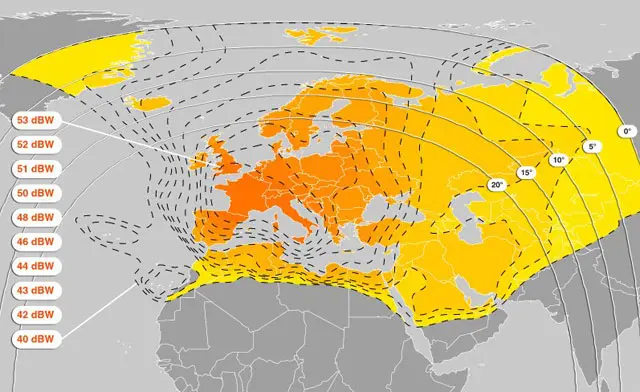
Coverage Check: Verify your location is within the satellite’s beam using coverage maps on www.dishpointer.com or www.satbeams.com.
Tuning Abu Dhabi TV on Your Receiver
Adding Abu Dhabi TV to your satellite receiver is straightforward with these steps, compatible with most receivers (e.g., Strong, Humax, Starsat), though menu labels may vary slightly.
-
Access the Menu:
-
Press “Menu” or “Settings” on your remote.
-
Navigate to “Installation,” “Channel Search,” or “Antenna Setup.”
-
-
Select Manual Scan:
-
Choose “Manual Scan,” “Manual Installation,” or “Add Transponder.”
-
Select “Add TP” or “Edit Transponder” if prompted.
-
-
Choose Your Satellite:
-
Select Nilesat (7.0° W), Arabsat (Badr 4/8, 26.0° E), or Hot Bird (13.0° E) from the satellite list.
-
If not listed, manually enter the orbital position.
-
-
Enter Transponder Settings:
-
Refer to the frequency table above and input the settings for your chosen satellite (e.g., 11823 MHz, Vertical, 27500 kS/s, 5/6 for Nilesat).
-
Double-check entries for accuracy.
-
-
Run the Scan:
-
Press “Scan,” “Search,” or “OK” to start the scan.
-
Select “FTA Only” or “All Channels” to include free-to-air channels.
-
Wait 1-3 minutes for the scan to complete.
-
-
Save Channels:
-
Press “Save” or “OK” to store the scanned channels.
-
Abu Dhabi TV will appear as “Abu Dhabi TV HD” or “Abu Dhabi TV” in your channel list.
-
-
Fine-Tune for Strong Signal:
-
If the signal is weak or the channel is missing, adjust the dish’s azimuth and elevation while monitoring the signal meter.
-
Check LNB skew and cables for 70-98% signal strength.
-
-
Test the Broadcast:
-
Locate Abu Dhabi TV in your channel list and select it to confirm clear playback.
-
If issues persist, recheck settings or consult a professional installer.
-
Receiver Tips:
-
For Strong receivers (e.g., SRT 4950), enable “LNB Power” in the “Transponder” menu.
-
For Humax or Starsat, set LNB to “Universal” for Ku-band.
-
Default PINs (e.g., 0000, 1234) may be required; refer to your manual.
Abu Dhabi TV’s Engaging Programming
Abu Dhabi TV delivers a comprehensive lineup of programs, blending news, entertainment, and cultural content, appealing to Arab families. Key highlights include:
Top Programs
-
Ana wa Binti: A talk show hosted by Egyptian actor Sherif Mounir and his daughter, featuring celebrity interviews and family-oriented discussions.
-
Min Wahi Al-Tasreeh: A religious program presented by Sheikh Wassim Yousef, simplifying Quranic interpretations and Islamic rulings.
-
Yalla Social: A program exploring trending topics on social media, engaging younger audiences.
-
Min Rahiq Al-Iman: Hosted by Sheikh Wassim Yousef, it addresses Islamic misconceptions in a concise format.
-
Documentaries: Short films showcasing the UAE’s history, tourism, and cultural heritage.
Content divisions
-
News: Bulletins every three hours covering local, regional, and global events.
-
Dramas: Popular Gulf, Egyptian, and Syrian series, especially during Ramadan.
-
Talk Shows: Cultural, social, and political discussions with expert guests.
-
Cultural: Programs highlighting Emirati traditions and modern achievements.
-
Entertainment: Family-friendly shows and Arabic films.
Having detailed and precise information about frequencies, polarization, and symbol rates allows users to optimize their receivers efficiently. This ensures a stable signal, high-quality video, and clear audio for all channels across multiple satellites.
Regular monitoring of satellite updates keeps viewers informed about new channel launches, relocations, and temporary adjustments. Being proactive helps prevent unexpected interruptions and ensures that audiences can follow live broadcasts seamlessly.
Technical understanding empowers users to troubleshoot minor reception issues independently. By knowing how to adjust equipment and interpret changes, viewers can maintain consistent access without depending on professional assistance.
Updated frequency data also opens the door to exploring new content. Audiences can discover international channels, diverse programming, and special broadcasts that may not be accessible without timely and accurate information.
Managing multiple satellites and receivers becomes easier with structured and comprehensive information. Users can coordinate setups efficiently, ensuring that every channel functions optimally across different rooms or devices.
Beyond numbers and technical parameters, practical guides, tutorials, and tips enhance the user experience. Clear instructions help viewers align dishes, configure receivers, and adapt to changes without frustration.
Ultimately, staying informed, proactive, and equipped with accurate frequency data guarantees a seamless satellite television experience. Viewers can enjoy diverse content, uninterrupted broadcasts, and reliable performance across all satellites with confidence.
Each satellite carries a unique set of channels with specific technical requirements. By learning how to interpret these parameters, viewers can ensure that every adjustment they make improves reception quality and minimizes interference, creating a viewing experience that is both smooth and immersive.
Emerging satellites and newly launched channels introduce a layer of complexity that can be overwhelming without proper guidance. Accessing detailed, timely information empowers audiences to take advantage of these additions and enjoy fresh content from around the globe.
Satellite frequency management is not only about numbers; it is also about understanding how changes ripple through the entire system. Recognizing patterns in transmission shifts helps users anticipate disruptions and make adjustments before viewing is affected.
Technical mastery over satellite reception fosters independence. Viewers no longer need to rely on technicians for routine tuning or problem-solving, as they gain the ability to troubleshoot and fine-tune their systems effectively.
Exploring international programming becomes effortless when frequency data is accurate and organized. Users can expand their entertainment options, discover niche channels, and experience diverse content without the frustration of trial and error.
The dynamics of signal strength, dish alignment, and transponder settings require careful observation and action. When approached with the right knowledge, these challenges transform into opportunities to achieve exceptional picture and sound quality across all channels.
Practical implementation of updates and technical adjustments ensures that viewers remain ahead of changes. Each update becomes an opportunity to optimize equipment, enhance reception, and maintain uninterrupted access, rather than a source of inconvenience or confusion.
By combining technical awareness, curiosity, and proactive management, satellite viewers can transform a potentially complicated system into a seamless source of entertainment and information. The ability to adapt to changes quickly creates a sense of control and satisfaction rarely found in other media formats.
Ultimately, mastery of satellite frequencies offers a rewarding experience where reliability, discovery, and technical confidence converge. Viewers gain not only access to a wide array of channels but also a deeper understanding of the systems that bring global content into their homes.
Each satellite carries a unique set of channels with specific technical requirements. By learning how to interpret these parameters, viewers can ensure that every adjustment they make improves reception quality and minimizes interference, creating a viewing experience that is both smooth and immersive.
Emerging satellites and newly launched channels introduce a layer of complexity that can be overwhelming without proper guidance. Accessing detailed, timely information empowers audiences to take advantage of these additions and enjoy fresh content from around the globe.
Satellite frequency management is not only about numbers; it is also about understanding how changes ripple through the entire system. Recognizing patterns in transmission shifts helps users anticipate disruptions and make adjustments before viewing is affected.
Technical mastery over satellite reception fosters independence. Viewers no longer need to rely on technicians for routine tuning or problem-solving, as they gain the ability to troubleshoot and fine-tune their systems effectively.
Exploring international programming becomes effortless when frequency data is accurate and organized. Users can expand their entertainment options, discover niche channels, and experience diverse content without the frustration of trial and error.
The dynamics of signal strength, dish alignment, and transponder settings require careful observation and action. When approached with the right knowledge, these challenges transform into opportunities to achieve exceptional picture and sound quality across all channels.
Practical implementation of updates and technical adjustments ensures that viewers remain ahead of changes. Each update becomes an opportunity to optimize equipment, enhance reception, and maintain uninterrupted access, rather than a source of inconvenience or confusion.
By combining technical awareness, curiosity, and proactive management, satellite viewers can transform a potentially complicated system into a seamless source of entertainment and information. The ability to adapt to changes quickly creates a sense of control and satisfaction rarely found in other media formats.
Ultimately, mastery of satellite frequencies offers a rewarding experience where reliability, discovery, and technical confidence converge. Viewers gain not only access to a wide array of channels but also a deeper understanding of the systems that bring global content into their homes.
Each satellite carries a unique set of channels with specific technical requirements. By learning how to interpret these parameters, viewers can ensure that every adjustment they make improves reception quality and minimizes interference, creating a viewing experience that is both smooth and immersive.
Emerging satellites and newly launched channels introduce a layer of complexity that can be overwhelming without proper guidance. Accessing detailed, timely information empowers audiences to take advantage of these additions and enjoy fresh content from around the globe.
Satellite frequency management is not only about numbers; it is also about understanding how changes ripple through the entire system. Recognizing patterns in transmission shifts helps users anticipate disruptions and make adjustments before viewing is affected.
Technical mastery over satellite reception fosters independence. Viewers no longer need to rely on technicians for routine tuning or problem-solving, as they gain the ability to troubleshoot and fine-tune their systems effectively.
Exploring international programming becomes effortless when frequency data is accurate and organized. Users can expand their entertainment options, discover niche channels, and experience diverse content without the frustration of trial and error.
The dynamics of signal strength, dish alignment, and transponder settings require careful observation and action. When approached with the right knowledge, these challenges transform into opportunities to achieve exceptional picture and sound quality across all channels.
Practical implementation of updates and technical adjustments ensures that viewers remain ahead of changes. Each update becomes an opportunity to optimize equipment, enhance reception, and maintain uninterrupted access, rather than a source of inconvenience or confusion.
By combining technical awareness, curiosity, and proactive management, satellite viewers can transform a potentially complicated system into a seamless source of entertainment and information. The ability to adapt to changes quickly creates a sense of control and satisfaction rarely found in other media formats.
Ultimately, mastery of satellite frequencies offers a rewarding experience where reliability, discovery, and technical confidence converge. Viewers gain not only access to a wide array of channels but also a deeper understanding of the systems that bring global content into their homes.
Having detailed and precise information about frequencies, polarization, and symbol rates allows users to optimize their receivers efficiently. This ensures a stable signal, high-quality video, and clear audio for all channels across multiple satellites.
Regular monitoring of satellite updates keeps viewers informed about new channel launches, relocations, and temporary adjustments. Being proactive helps prevent unexpected interruptions and ensures that audiences can follow live broadcasts seamlessly.
Technical understanding empowers users to troubleshoot minor reception issues independently. By knowing how to adjust equipment and interpret changes, viewers can maintain consistent access without depending on professional assistance.
Updated frequency data also opens the door to exploring new content. Audiences can discover international channels, diverse programming, and special broadcasts that may not be accessible without timely and accurate information.
Managing multiple satellites and receivers becomes easier with structured and comprehensive information. Users can coordinate setups efficiently, ensuring that every channel functions optimally across different rooms or devices.
Beyond numbers and technical parameters, practical guides, tutorials, and tips enhance the user experience. Clear instructions help viewers align dishes, configure receivers, and adapt to changes without frustration.
Ultimately, staying informed, proactive, and equipped with accurate frequency data guarantees a seamless satellite television experience. Viewers can enjoy diverse content, uninterrupted broadcasts, and reliable performance across all satellites with confidence.
Understanding technical parameters such as frequency values, polarization, symbol rates, and satellite positions provides viewers with the knowledge necessary to optimize their receivers. This technical insight helps maintain strong signal strength, high-quality video, and crystal-clear audio. It also ensures that users can make precise adjustments to their equipment when signals are weak or when atmospheric conditions affect satellite reception. By mastering these details, viewers gain control over their satellite systems and can enjoy a superior television experience regardless of the complexity of their setup.
Regularly monitoring satellite updates ensures that audiences are aware of new channel launches, temporary frequency shifts, or permanent transponder relocations. Being proactive in tracking these updates prevents unexpected disruptions in programming and allows viewers to continue watching live broadcasts without interruption. Additionally, this knowledge helps audiences stay ahead of schedule, ensuring they never miss critical events or popular programs, whether they are live sports matches, international news, or exclusive entertainment shows.
In addition to frequency data, understanding how changes impact reception empowers users to troubleshoot common technical issues independently. Viewers can make adjustments to dish alignment, receiver settings, and other system components without relying on professional assistance. This autonomy not only saves time and financial resources but also fosters confidence in managing satellite television systems. By having the right tools and knowledge, users can overcome typical reception problems quickly and efficiently.
Access to comprehensive and accurate frequency information also opens doors to discovering a wide variety of global content. Users can explore international channels and programming that may not be available locally, including foreign films, documentaries, educational content, and live broadcasts from different countries. This expanded access enriches the viewing experience, allowing audiences to enjoy diverse entertainment options and gain exposure to global perspectives while staying connected to cultural, educational, and news content worldwide.
Managing multiple satellites and receivers simultaneously can be a complex task, but with organized, detailed, and structured frequency information, the process becomes significantly easier. Users can coordinate settings across multiple receivers to ensure that each channel performs optimally. This is particularly valuable for households with several viewing locations, shared systems, or advanced setups requiring precise alignment and configuration. Having access to comprehensive data reduces trial and error, enhances efficiency, and guarantees that every channel functions smoothly without signal loss or degradation.
Practical guides, tutorials, and visual instructions further enhance the user experience. Step-by-step directions for aligning dishes, configuring receivers, and implementing frequency changes simplify technical procedures. These resources are particularly helpful for beginners, providing actionable guidance that transforms complex satellite setup tasks into manageable steps. Even experienced users benefit from detailed instructions, which ensure accuracy, minimize errors, and allow users to maximize the performance of their satellite systems.
Staying informed and proactive regarding frequency updates also helps viewers plan their viewing schedules effectively. By knowing when new channels are launched, frequencies are adjusted, or temporary changes occur, audiences can schedule live viewing, recordings, and favorite program marathons with confidence. This level of preparedness prevents frustration, ensures access to important broadcasts, and enhances overall enjoyment by giving users full control over their entertainment experience.
Ultimately, having accurate, comprehensive, and up-to-date frequency information empowers viewers to enjoy satellite television to its fullest potential. Seamless access, high-quality reception, and a diverse selection of programming become easily achievable. By combining technical knowledge, practical guidance, and proactive monitoring, users can maintain uninterrupted viewing, explore new content, and overcome technical challenges, ensuring that satellite television remains a reliable, enjoyable, and enriching experience for audiences worldwide.
Even minor changes in frequency or transponder settings can affect signal quality. Being informed allows viewers to quickly adjust their equipment and maintain consistent access to their favorite programs.
Understanding technical aspects such as polarization, symbol rates, and satellite positions empowers users to optimize their receivers. This knowledge reduces common reception issues and enhances picture and sound quality.
Regular updates help viewers stay aware of new channels and relocated frequencies. This ensures that audiences can access a wide range of content across multiple satellites without missing important broadcasts.
Monitoring changes proactively allows users to respond to temporary disruptions or permanent adjustments in satellite transmissions. This preparedness is crucial for maintaining uninterrupted viewing over time.
Having clear and detailed information also helps viewers troubleshoot issues independently. Users can make precise adjustments without relying on professional help, saving time and effort.
Following satellite updates opens opportunities to explore diverse programming. Viewers can discover entertainment, sports, news, and educational channels from around the world, expanding their viewing options.
Consistent access to accurate frequency data enhances the overall satellite television experience. Viewers can enjoy high-quality reception, discover new content, and confidently manage their satellite setups.
Ultimately, staying informed and attentive empowers audiences to enjoy satellite television with ease and reliability. Accurate, up-to-date frequency information ensures seamless access to channels across all satellites, making viewing more enjoyable and dependable.